


 This is the first performance venue for the Quire of Voyces: The Pantheon in Rome. On June 17, at 5 pm they will have a recital in the ancient building.


 The Protestant Kaiser Wilhelm Memorial Church (in German: Kaiser-Wilhelm-Gedächtniskirche) is located on the Kurfürstendamm in the center of the Breitscheidplatz. The original church on the site was built in the 1890s. It was badly damaged in a bombing raid in 1943. The present building, which consists of a church with an attached foyer and a separate belfry with an attached chapel, was built between 1959 and 1963. The damaged spire of the old church has been retained and its ground floor has been made into a memorial hall.
 thinkers and Reformation princes. Bas-relief sculptures illustrate scenes from biblical stories, scenes from the life of Kaiser Wilhelm I and symbolic figures representing war and peace. In the north apse are 16 display panels which tell the story of the old church and its destruction. At the opposite end of the hall are three items which symbolize the history of the church. In the middle is a damaged statue of Christ which originally stood on the altar of the old church. To its right is the Cross of Nails which was made from nails in the roof timbers of Coventry Cathedral. This cathedral had been severely damaged in a German air raid on 14 November 1940. To the left of the statue of Christ is an icon cross which was given by the Russian Orthodox Church and handed over in 1988. Outside the hall are four sandstone figures made by Stefan Kaehne.
 The Bob Cole Conservatory Choir under the direction of Dr. Jonathan Talberg was granted permission to present a special recital at the famous Frauenkirche in Dresden, Germany on June 8 at 5:30 pm during their 2010 Incantato Performance Tour to Central Europe.
 When you visit Prague Castle, look around at the Castle Square before the main entrance. There are several historical palaces, and the Martinic Palace is one of them – it is one of the most beautiful Renaissance buildings in Prague, built in the 16th century. And this is the performance venue for the Bob Cole Conservatory Choir tonight, 7 pm!
 The menu offers a variety of food, with a large section of traditional Czech dishes, as well as pasta dishes and great appetizers for beer drinking :)

 Another prime venue awaits the CSULB singers under the direction of Dr. Jonathan Talberg on the Bob Cole Conservatory Choir's 2010 Incantato Tour to Central Europe: The Tyn Church, a landmark of Prague and also the most popular church for the inhabitants of the Czech Capital city. The singers from Long Beach California were invited to sing during a special service on June 6 at 9 pm.
 Český Krumlov is a small city in the South Bohemian Region of the Czech Republic, best known for the fine architecture and art of the historic old town and Český Krumlov Castle. Old Český Krumlov is a UNESCO World Heritage Site and was given this status along with the historic Prague castle district. The city is named Český Krumlov ("Bohemian Krumlov") to differentiate it from Moravský Krumlov ("Moravian Krumlov") in the southeast of the country.
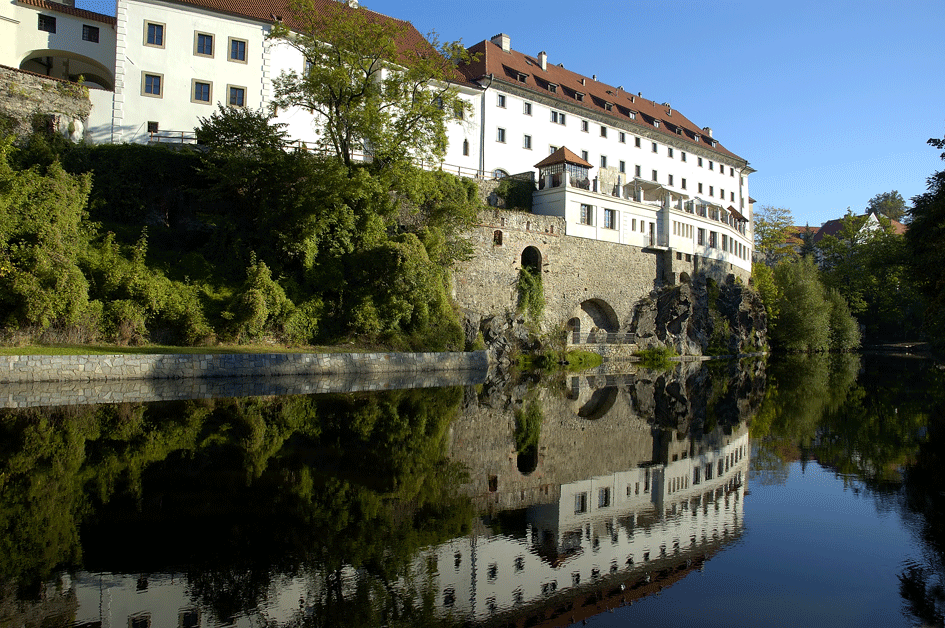 side of the Vltava. The town was seat of Duchy of Krumlov. 8,662 inhabitants lived in Krumau an der Moldau in 1910, including 7,367 Germans and 1,295 Czechs. During the interwar era it was part of Czechoslovakia. Between 1938 and 1945 it was annexed by Nazi Germany as part of the so-called Sudetenland. The town's German-speaking population was expelled after liberation by the American Army during World War II and it was restored to Czechoslovakia. During the Communist era of Czechoslovakia, Krumlov fell into disrepair, but since the Velvet Revolution of 1989 much of the town's former beauty has been restored, and it is now a major holiday destination popular with tourists from Germany, Austria, and beyond. In August, 2002, the town suffered from damage in the great flood of the Vltava River.
V stredu, 2. júna 2010 o 17:00, sa v Katedrále svätého Martina uskutočnil koncert spevokolu z The Bob Cole Conservatory z Californie. Týmto koncertom odštartovali svoje turné po Európe. Za začiatok svojej koncertnej šnúry si zvolili práve Bratislavu.
V nasledujúcich dňoch navštívia so svojim repertoárom Rakúsko, Česko a zakončia koncertom v Berlíne. Toto teleso mladých študentov predviedlo v bratislavskej katedrále vysoko profesionálny výkon a priniesli naozaj hlboký duchovný a umelecký zážitok. Škoda len, že verejnosť bola slabo informovaná a na koncerte sa zúčastnilo iba zopár ľudí.
 |
 |
 |
 |
http://csulb-incantatotour.blogspot.com/2010/06/more-impressions-from-bob-cole.html
http://csulb-incantatotour.blogspot.com/2010/06/dinner-at-staroslovenska-krcma-in-old.html
http://csulb-incantatotour.blogspot.com/2010/06/flyin-lufhansa-and-lovin-bratislava.html
http://csulb-incantatotour.blogspot.com/2010/06/debut-concert-for-bob-cole-conservatory.html
Text a foto: Milan Cehlárik
 "I love this church", commented Dr. Jonathan Talberg on late Thursday night on the phone from beautiful Göttweig where the Bob Cole Conservatory Choir performed to a small yet very appreciative audience in the magnificent Stiftskirche - the perfect setting for Mendelssohn's "Heilig" sung in double choir from the altar area. Rainy weather and a national holiday brought only 32 listeners to the Benedictine Abbey, but they sure made some noise. Especially two older ladies who were so moved by the concert yet also extremely upset about the lack of a full house for the singers from Cal State Long Beach that they even yelled at one of the Father accusing him of not spreading the word about the event more: "Das war der beste Chor, der hier je gesungen hat und keiner wusste davon", one lady said: "This was the best choir we ever had here and nobody knew they were coming". No that nobody knew is hard to believe as a quick google search produced about 512 results for the concert listing and Incantato's concert management team had done their homework as well by sending out press releases to the media along with personal invites to local fans of choral music, but the national holiday on the Thursday is for many locals a reason to pack the whole family and go on a long weekend trip which combined with rainy weather and floods that keep the tourists away, can result in only a small crowd. "It didn't really matter so much", Talberg added. "The choir sounded amazing and we had a lot of fun." Last not least, the choir was asked for an encore and received two standing ovations - quite unusual for European audiences who are not known for showing such public displays of enthusiam, especially not in church. "It was a perfect day", their director concluded. After departing from Bratislava, the singers from CSULB had first stopped at Melk Abbey where they had been granted permission to sing a full set of sacred selections (another rare moment) and then continued on to Goettweig for a private reception, tour and rehearsal of the magnificent abbey perched high upon a hill that looks and feels like a fairy tale castle. And the best part of the day? Well, it sounded like the night ahead of them at the former boy school dormitory right next to the pink church where the group is staying for two nights. The only downside is that we will have to wait for actual pictures at least until tomorrow. While there is a gourmet restaurant just around the corner where they had dinner already and breakfast will be served for Dr. Talberg and his students, the Abbey does not offer wifi or any internet services. Auf Wiedersehen - Sandra for the CSULB gang in Göttweig, Austria!


